Kindred Spirits
The Story of Spirits Rejoice

The foundations of modern South African jazz were laid in the late 1950s by way of the Jazz Epistles, a dream team that channeled the spirit of Charlie Parker and launched the careers Hugh Masekela and Abdullah Ibrahim, South Africa’s most widely recognised jazz exports. What followed in the 1960s was a rendering of jazz in South African form – the “African Sound” as the title of Chris McGregor’s 1963 outing with the Castle Lager Big Band acclaimed or “Our Kind of Jazz” as saxophonist Zacks Nkozi put it in 1964. In 1968, Winston Mankunku’s “Yahal’ Inkomo” mined a deep pastoral African archetype while sustaining a transatlantic kinship to the rise of spiritual jazz in the United States with John Coltrane at its helm. Mankunku’s magnum opus joined a wave of recordings from the likes of Chris Schilder, Gideon Nxumalo and The Soul Jazzmen that would ignite the aspirations of the South African scene in the 1970s as local musical idioms continued to dialogue with new directions from abroad.
The 1970s is regarded as a period of experimentation, boundary-breaking and hybridization in modern music and this spirit certainly informed the mushrooming of ideas that occurred in South African jazz during this time. In the shadow of more commercial township jive and soul, South African jazz evolved on the fringe, nurtured by passionate and enterprising independent producers who courted the interest of the mainstream with enchanting concoctions of jazz with folk, rock, soul and funk. Gallo Record Company manufactured and distributed mid-1970s breakout releases like Dollar Brand’s Mannenberg – ‘Is Where It’s Happening’ (produced by Rashid Vally) and Zandile by the Jazz Ministers (produced by Ray Nkwe) while WEA South Africa platformed the debut of an avant-garde jazz ensemble called Spirits Rejoice (produced by David Marks).
Released on Atlantic in 1977 and reissued by Matsuli Music in 2021 with notes by Francis Gooding, African Spaces took cues from the jazz fusion innovations of Miles Davis and Chick Corea to present a bold and uncompromised manifesto for the cutting edge of South African jazz. Alongside Cape Town’s Pacific Express, Spirits Rejoice marked the rise of the super group as a vehicle for progressive sounds. As significant as the emergence of a handful of South African stars on the international scene, this provided a milestone for the crystallisation of South African jazz at home – a clear signal that a scene had emerged that was forging something greater than the sum of its individual parts. While Hugh Masekela declared that “The Boy’s Doin’ It” on a big international release in 1975, trumpeter Dennis Mpale reframed the affirmation as “Our Boys Are Doing It” on an independent South African recording in 1977. South African jazz had both its revered ambassadors abroad as well as a local scene that was collectivising its creative currents into dynamic constellations.
The assembly of powerful individual musicians that comprised Spirits Rejoice traced their lineage to the African Music and Drama Association (AMDA) in Johannesburg with its headquarters at Dorkay House, long established as a networking hub and crucible for exciting developments in South African jazz. Proof of concept had already been established by two of the group’s core members, saxophonist Duke Makasi and bassist Sipho Gumede, who had been part of a short-lived ensemble in 1975 called Roots, which had released two albums with the explicit aim of creating “Rock Jazz with a local sound.” Roots had shown that there was a commercial marketplace for progressive-leaning jazz recordings but had illustrated that this alone could not sustain an ambitious conglomeration of seasoned talent. With professional management minding the business, Spirits Rejoice embraced moonlighting as a support band and session team to ensure their survival from 1975 into the early 1980s, a trajectory that would see them touring with a theatre production, contributing to the genesis of one of South Africa’s most beloved cross-cultural duos, backing one of South Africa’s most enduring pop ballads, aligning with international acts on South African tours and delivering two maverick albums in the process.
Building of their success as a folk cabaret act in the early 1970s, Des and Dawn Lindberg began an ambitious foray into musical theatre in South Africa with the production of Godspell in 1973 and Pippin in 1975. This laid the groundwork for their most ambitious production to date, The Black Mikado, a cultural reimagining of the Gilbert and Sullivan classic with a black cast that had become a hit on London’s West End. Obtaining the rights for a South African version, the Lindbergs faced the challenge of assembling an adept team of musical accompanists and proceeded to conduct auditions at Dorkay House. Founder of Union Artists, Ian Bernhardt steered their choice in the direction of a nascent ensemble called Spirits Rejoice, which he managed with his daughter Linda. The play opened in May 1976 and embarked on a tour that coincided with the student uprising in Soweto. For the band, it was an alchemical rite of passage that hardened their inner workings and prepared them for their October 1976 recording of African Spaces.
As with many groups of its kind, the story of Spirits Rejoice unfolds with a series of personnel shifts over the course of its evolution. The group’s founding duo and de-facto leadership was comprised of drummer Gilbert Matthews and tenor saxophonist Duke Makasi, who held down an unchanging core lineup with George Tyefumani on trumpet and Sipho Gumede on bass. Both hailing from Cape Town, guitarist Russell Herman and later pianist Mervyn Africa came aboard as early replacements. As Africa recalls, Beki Mseleku of the Drive very nearly took the Black Mikado gig but opted out owing to the strictures of the annotated score amidst growing disillusionment with management. A restless musical spirit, Herman’s tenure with the group ended prior to the recording of the band’s second album when he passed the guitar mantle to childhood friend Paul Petersen. Alto saxophonist and flautist Robbie Jansen also joined the group between albums along with second trumpeter Thabo Mashishi, who replaced Temba Mehlomakulu.
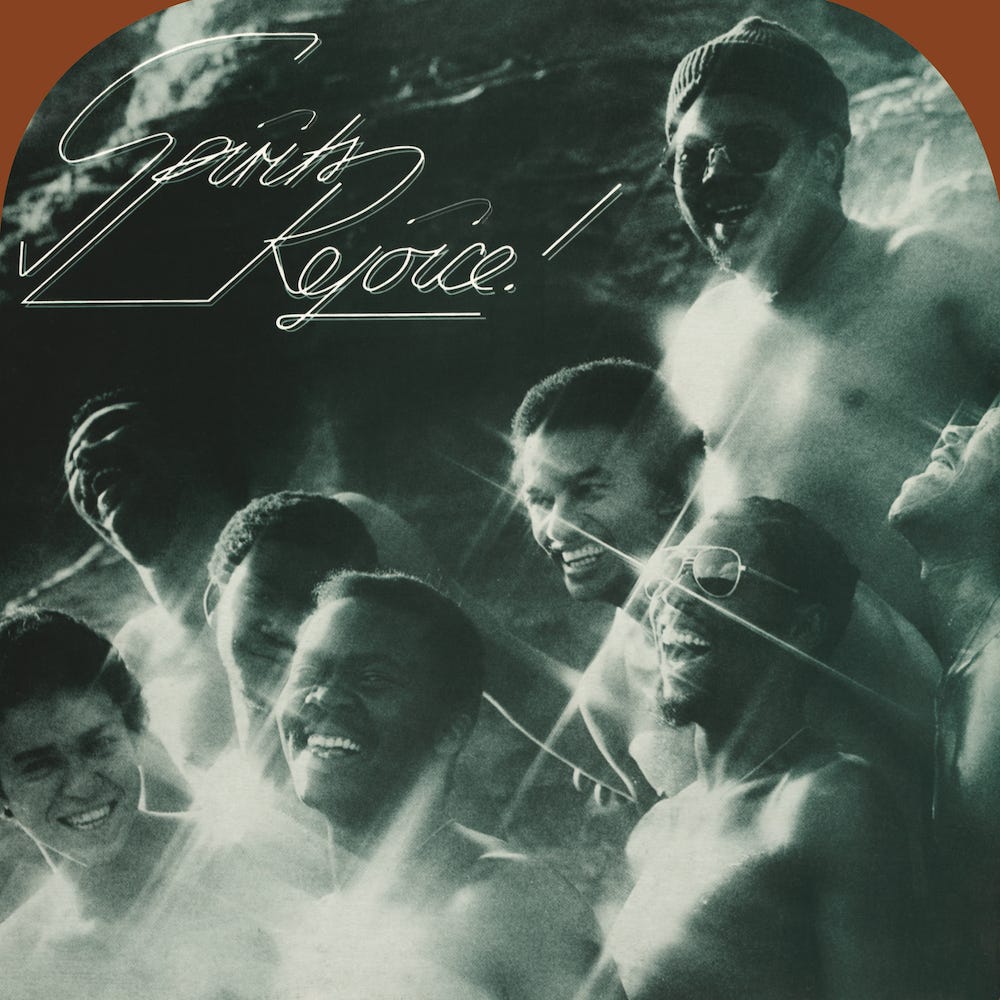
Spirits Rejoice turned to the Satbel Record and Tape Company for its sophomore release in 1978. The deal provided access to a high-end studio on Marshall Street in Johannesburg with a seasoned engineer and producer by way of Greg Cutler. The project was handled by the Satbel imprint Jo’Burg Records, which was building a unique catalogue of jazz, funk, soul and disco crossovers from its multiracial pool of session players. The aim was to produce a South African sound with modern sensibilities that traversed racial boundaries and the Jo’Burg studio project Soul of the City had already successfully facilitated the unlikely 1975 collaboration of Jazz Epistles sax giant Kippie Moeketsi with guitar wizard Trevor Rabin from power-pop rockers Rabbitt. While Spirits Rejoice joined the likes of Batsumi and Mike Makhalemele as one of the label’s more earnest jazz offerings, the band embraced the idea of creating an album with commercial hooks as a counterpoint to its deep fusion explorations.
The album opener “Emakhaya” revisits the Sipho Gumede composition recorded by Roots in 1975 with more vivid flourishes – a lightning storm lead-in with a spoken word intro from George Tyefumani accompanied by subtle synth textures on guitar and keys. But this version’s most transformative characteristic is Robbie Jansen’s flute and the cosmic bass solo thereafter. The Africa/Herman composition “Woza Uzo Kudanisa Nathi” follows, picking up the pace with an Afro-Latin flavor. Mervyn Africa translates the title’s choral chant as “Come Let It Be Heard” and cites touring with the group Oswietie in West Africa and Angola along with Cape Town’s carnivalesque goema drum beat as its inspiration. “Music is Our Purpose” articulates Duke Makasi’s vision of a modern sax-driven big band while “Spirits” provides an opportunity for Gilbert Matthews to flex on drums as a prologue and epilogue to the song’s exotic journey.
Side B opens with the Chicago-influenced disco-soul burner “Happy and In Love” featuring Robbie Jansen on lead vocals and drawing a natural comparison to the band’s Cape Town compatriots Pacific Express, who featured Jansen as a vocalist on their 1976 debut. The group’s concert opener “Confusions” comes next, indulging in a meditative keyboard introduction with the spotlight on Mervyn Africa before bringing up the lights and breaking out a polyrhythmic funk. Jansen returns with a vocal lament on the penultimate track, drawing on a poem written by Africa about the Angolan Civil War in 1975 yet universally applicable. Spirits Rejoice then invite all present to sing the vocal chant on “Papa’s Funk,” a rousing finale dedicated to co-manager Ian Bernhardt, affectionately known as “Papa,” who had supported the band since its inception and had been a champion of South African jazz since promoting the lauded King Kong musical in 1959.
Although it would be their final long-player, the band’s story doesn’t end with the release of Spirits Rejoice! in 1978. The group toured extensively, were regular features at the Pelican Club in Johannesburg and enjoyed a formidable residency at the Sherwood Lounge in Cape Town. A long-time collaborator of the band, female vocalist Felicia Marion had formed the group Joy with Thoka Ndlozi and Anneline Malebo and contributed backing vocals to “Happy and In Love” and “Papa’s Funk.” The trio continued to work closely with Spirits Rejoice under Linda Bernhard’s management, supporting Timmy Thomas on his South African tour in 1979 and appearing on Juluka’s Universal Men, a debut album that would launch a decades-long career for Johnny Clegg. With the commercial breakout of Joy’s pop ballad “Paradise Road” on producer Patric van Blerk’s Café Society label in 1980, Spirits Rejoice took a back seat to the mainstream success of their female compatriots. It was a humbling experience for a serious jazz group but their vital presence on Joy’s “Ain't Gonna Stop (Till I Get to The Top)” and its B-side “Get Up! Stand Up!” made for one of South Africa’s finest dancefloor singles from the disco era. A final single attributed to Spirits Rejoice came by way of “Shine On” backed with “I'm So Strong Now (What Does It Matter)” in 1980 but the restructured group with its shift in style called for a rebranding and the modern dance album I Feel It Rising that followed in 1981 was packaged as Doctor Rhythm featuring Spirits Rejoice with Paul Petersen doing most of the heavy lifting.
Spirits Rejoice officially disbanded in the wake of the Doctor Rhythm project. Mervyn Africa departed for England and reunited with Russell Herman (1953-1998) to form the group District Six and build a career in London. He has since returned to South Africa and lives in Cape Town. Gilbert Matthews (1943-2020) settled permanently in Sweden, where he collaborated with former Blue Notes bassist Johnny Dyani in the 1980s and integrated into the local scene. Duke Makasi (1941-1993) continued to work in South Africa and recorded his memorable solo offering Rise and Shine featuring Sipho Gumede in 1984. Sipho Gumede (1952-2004) joined Sakhile, the great South African jazz ensemble of the 1980s, and enjoyed a very successful solo career in the 1990s. Robbie Jansen (1949-2010) returned to Cape Town and blossomed as a solo artist in the early 2000s fronting a formidable band called The Sons of Table Mountain. Paul Petersen returned to Cape Town to work with acclaimed composer and dramatist Taliep Petersen (no relation) and has since become a producer, co-founding and managing the studio Cape Town Sound with Patric van Blerk.
With a lineup hailing from far flung regions of South Africa, the mercurial sound of Spirits Rejoice and its willingness to weave a patchwork of different influences into its recordings is not hard to account for. More difficult to reconcile is that the band didn’t manage to level up to the status enjoyed by its peers in larger music markets abroad. Nevertheless, Spirits Rejoice has maintained its revered status in the collective memory of South African jazz for over four decades and their recorded artifacts return in the 2020s with the group’s vitality and energy undiminished.
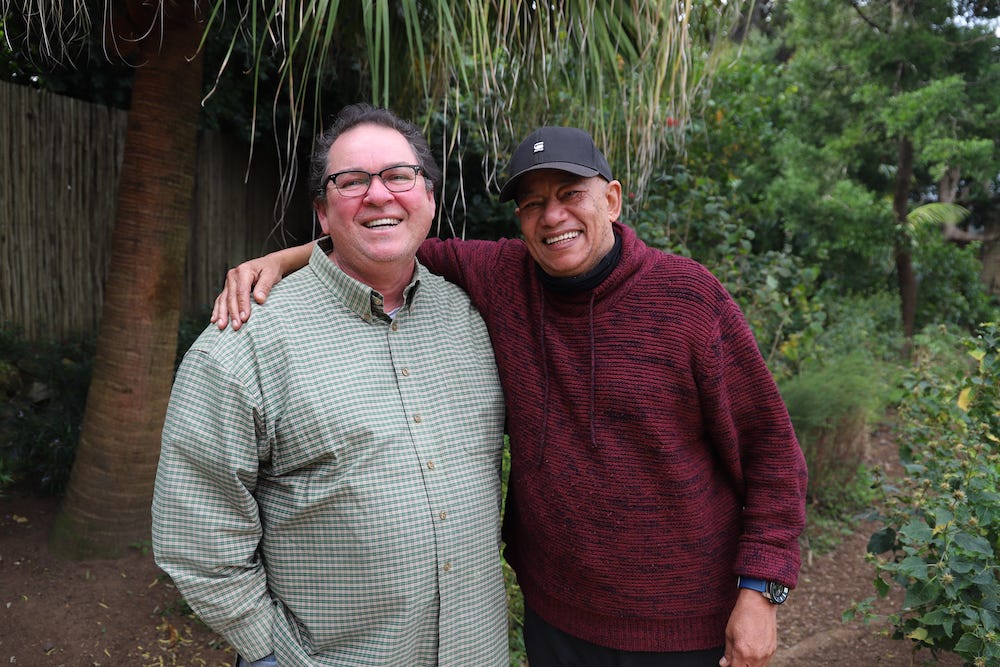
* Notes and photo by Calum MacNaughton (Sharp-Flat Records) from an interview with Mervyn Africa and Paul Petersen in Cape Town in July 2020. Originally published with the Frederiksberg Records reissue of Spirits Rejoice! in February 2023.