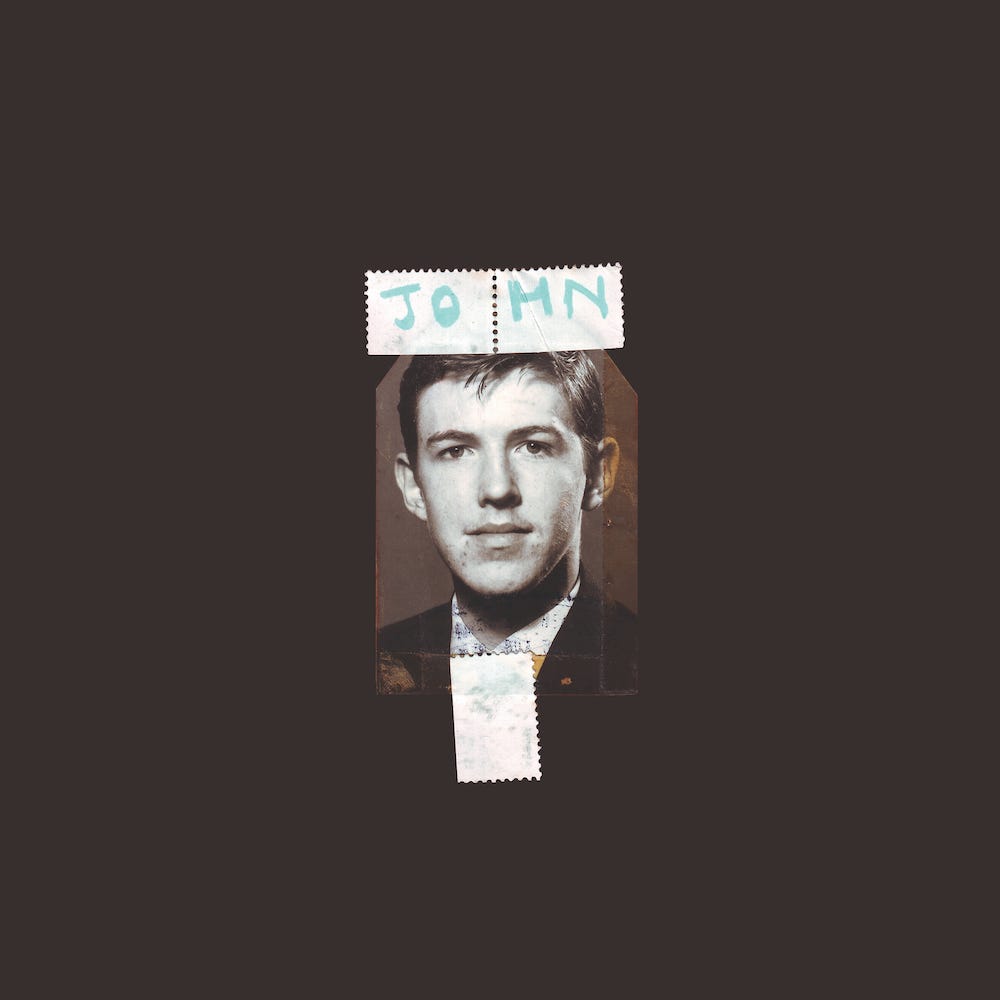
Searching for John
The Last Great Folk Discovery of the 20th Century

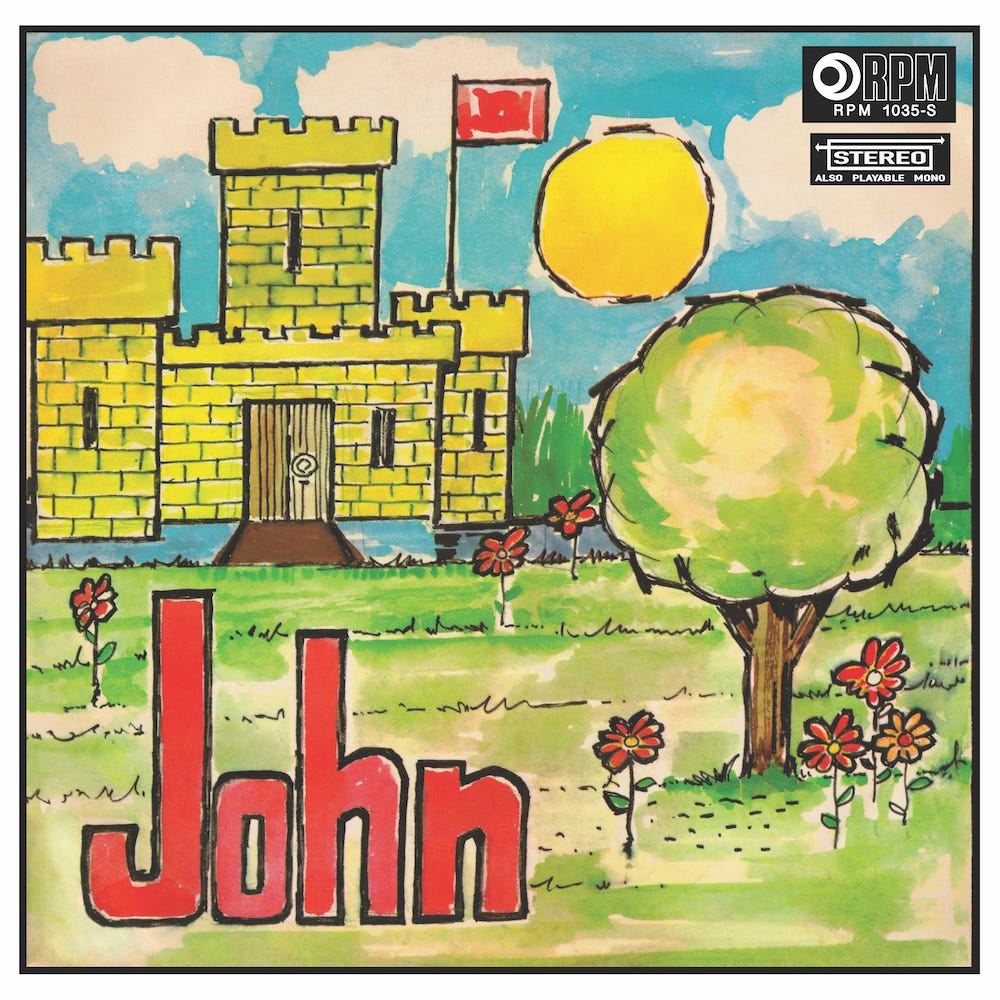
Our story begins with a vinyl record sleeve – an empty field, a smattering of flowers next to a solitary tree, a castle, a tower, a red flag, a bright yellow sun hovering in a cloudy blue sky. It’s an imaginative, child-like universe populated exclusively by the title John – an invitation to the listener to dive into its mystery.
The album artwork is attributed to Margaret Schnaar, who also illustrates the debut album of ethno jazz avant-gardist Philip Tabane. It’s a meaningful coincidence as there’s a creative alliance between South Africa’s white progressive folk and black Afro-jazz scenes, a mutual interest in craft, authenticity and the idea of reconciling tradition with modernity. Engineer Geoff Tucker provides another link to the South African jazz scene, having cut his teeth a decade prior recording Jazz in Africa Vol. 1 with Hugh Masekela, Kippie Moeketsi and Jonas Gwangwa of the Jazz Epistles. Issued in 1969, John appears on the nascent RPM label flanked by hip, easy-listening long players from prolific local instrumentalist Dan Hill (file next to Herb Alpert and Fausto Papetti) and international 7-inch bangers from the likes of Dutch pop-rockers George Baker Selection (“Little Green Bag”) and Tee-Set (“Ma Belle Amie”).
A search engine dive for a songwriter in South Africa named Phillips yields a number of different rabbit holes. James Phillips was the working-class hero of South African rock in the 1980s, crafting the alter ego Bernoldus Niemand (translating as Bernard Nobody) and inspiring a generation of dissident artists to write and sing in Afrikaans. Former flatmate of Donovan and “Season of the Witch” co-creator, Texan songwriter Shawn Phillips lived and worked in South Africa during the 2000s (likely because his 1970 album Second Contribution was second only to Cold Fact by Rodriguez as the country’s favourite underground folk-rock record of the era). Narrow the search field and you hit American namesake John Phillips of the Mamas and The Papas by way of his third wife, South African actress and singer Genevieve Waite. Until recently, the Phillips who created John in 1969 held only a brief mention in the aptly-named Hidden Years Music Archives on the website of a record label named 3rd Ear Music.
Songwriter David Marks earned his stripes as a sound engineer in North America in 1969, crewing at Woodstock and John Lennon’s Rock and Roll Revival concert in Toronto. Supported by royalties from his hit song “Master Jack,” a chart-topper for South African vocal group Four Jacks and a Jill that went on to hatch a clutch of successful international covers, he dedicated himself to producing fringe events and recordings under the banner of 3rd Ear Music and became a key documentarian of independent South African folk and Afro-jazz in the 1970s. When asked about Phillips, he explains that John was one of a number of talented musicians from Rhodesia (now Zimbabwe) who performed in Johannesburg periodically during this era. He even recalls an appearance at Hillbrow’s bohemian Troubadour Club in which Phillips performed in drag and points to another singer-songwriter still residing in Zimbabwe called John Oakley-Smith for more information.
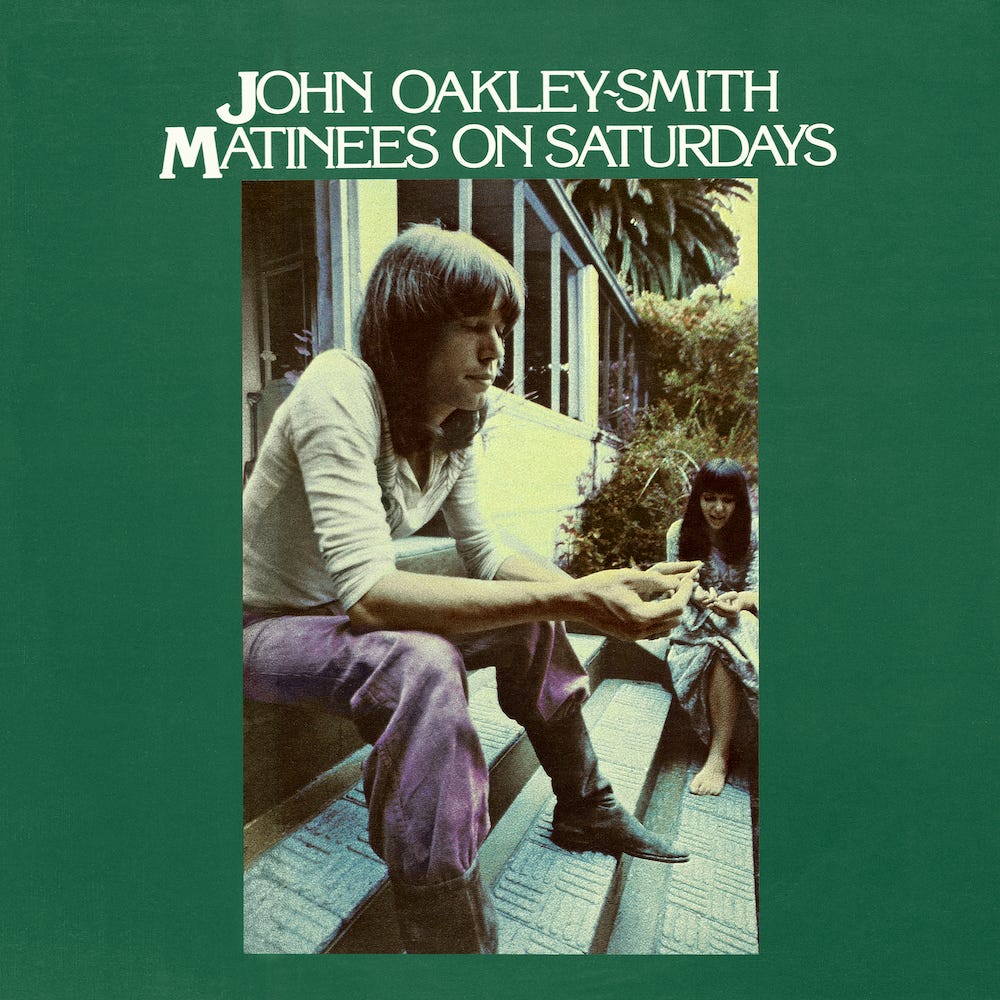
Like Phillips, Oakley-Smith’s name is attached to a solitary recorded artefact, his being an exquisite piano-accompanied offering produced by 3rd Ear Music in 1976 entitled Matinees on Saturdays. It turns out that the two Johns were acquainted on the Rhodesian folk scene and even worked together when Oakley-Smith was invited to participate in a low-budget recording session led by Phillips in 1972. This was the last time that Oakley-Smith had seen Phillips or heard mention of the songs that were recorded. Years later, amidst rumours that Phillips had undergone a sex change, Oakley-Smith drafted a short story about their friendship entitled “The Man Who was Hit on the Head by a Fish and Turned into a Woman”. Given the unreliable nature of the grapevine, the story was discreetly shelved but Oakley-Smith remained unsettled by John’s mysterious disappearance. Decades later, he offers to investigate and travels from his home in Mutare to the Zimbabwean capital of Harare in 2017 to make some on-the-ground enquiries. Oakley-Smith soon learns that Phillips died in the 1990s but emerges with the email address of a younger brother named Gordon.
Following a decade and a half of limited contact, Gordon Phillips was tasked with handling John’s affairs following his death from cancer in England in 1995. Among the vinyl records he cleared from his brother’s apartment in Oxford was a copy of the John LP with colour added by hand to the black and white illustrations on the back cover. Gordon looks after John’s copy of the album for years but, having also held onto a copy of his own, eventually decides to set it free, donating it to a charity store near his home in Colchester in 2010 and triggering a powerful chain reaction of the process. The LP finds its way into the hands of a vinyl enthusiast who posts clips on YouTube and a Discogs listing appears shortly thereafter. Interest is further ignited in 2016 when 38 deadstock copies turn up in a warehouse in Durban, swiftly osmosing into the stacks of international psych and folk collectors. By 2017, John Oakley-Smith and Gordon Phillips, the defacto ambassadors of John’s story, find themselves being interviewed by Flashback Magazine for an article about the album with the tagline “crying to be heard.”
Prompted to dig up some photos of John, Gordon turns to another brother, named Brian, who lives in New Zealand. Miraculously, three reel-to-reel tapes and a set of notebooks with writings, photographs and drawings emerge from a long-forgotten box in the attic. The most robust of the books, in which John’s lyrics are beautifully handwritten, is entitled Songs of Gentleness. The reel-to-reel tapes yield the 1972 recordings that John Oakley-Smith participated in as well as two tapes of solo demos recorded in 1976. Unheard for 50 years, these gentle songs are John’s enduring gift to the world.
Introduction from the booklet for the 2026 vinyl box set Songs of Gentleness 1969-1976, a 4LP collection of the complete recordings of John Phillips of Rhodesia (the first ever reissue of his 1969 album and first editions of three previously unreleased works). Featuring archival photographs and drawings, the booklet details John’s story with contributions from his brother Gordon and collaborator John Oakley-Smith. Digital audio for John Phillips and John Oakley-Smith can be found here.